About
A complete, offline K-12 education system for rural schools without internet or reliable power.
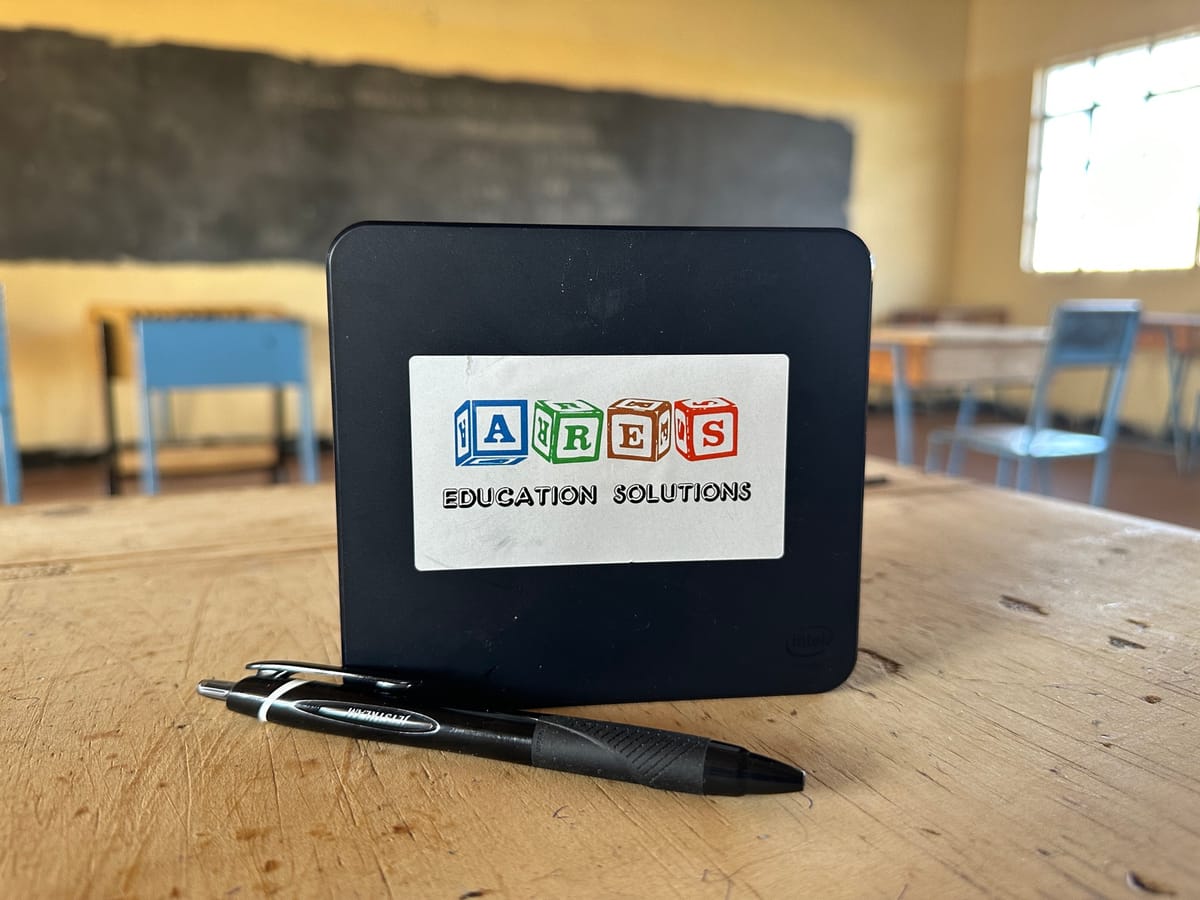
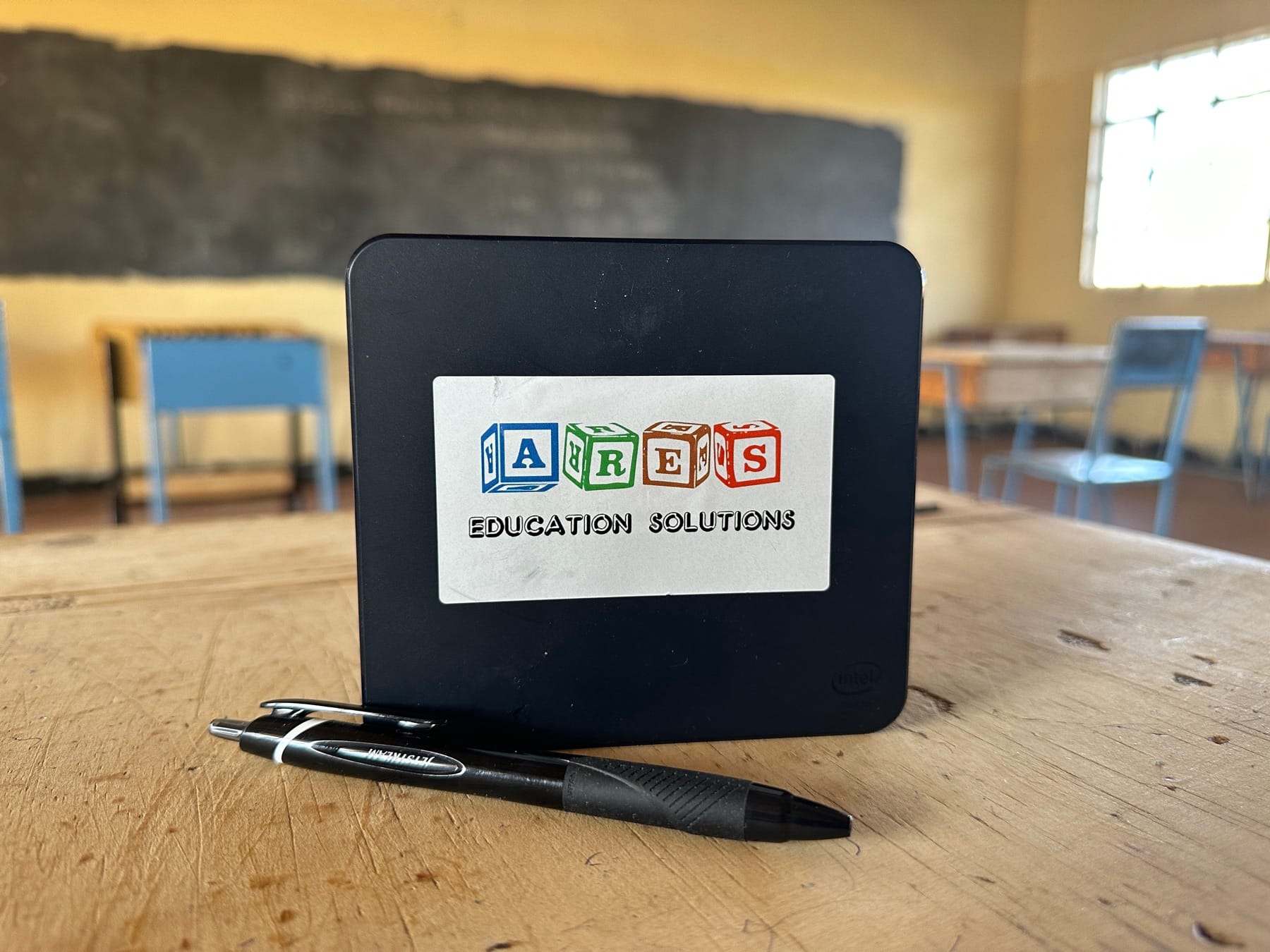
ARES (African Ruggedized Education Solution) is a complete K-12 education system built for rural schools that have no internet and unreliable power. One rugged, battery-backed server brings hundreds of gigabytes of learning material and teaching tools to every laptop, tablet and phone on a school campus.
The problem: a digital literacy gap
The benefits of computer-based education are widely recognized. But most rural Kenyan schools have neither internet access, computers, nor digital literacy training. The result is a growing gap between rural Kenyan students and their peers in Nairobi and around the world.
How ARES closes it
- High-quality material. A curated collection for primary and secondary schools: CBE-aligned STEM lesson plans from our partner SeaVuria, Khan Academy, Wikipedia, TED-Ed, CK-12, PhET simulations, Project Gutenberg, an English/Swahili dictionary and much more.
- Built for Kenya. All of the Kenyan competency-based curriculum for every grade, 11 years of KCSE exams, and a search tool that links content to the curriculum.
- No internet needed. About 500 GB of content lives on the server and is reachable from any browser anywhere on campus over a mesh Wi-Fi network.
- Works when the power doesn't. Battery backup is built in.
- Very low cost per pupil. One server and mesh network can serve hundreds of students.
What a school receives
Now in its fourth hardware generation, each installation includes the ARES server, 20 to 30 notebooks, projectors and a campus-wide wireless network. Just as important, several teachers from every school take a two-day intensive training course, and local ARES staff visit regularly afterwards to train, maintain equipment and track student progress.
Our story
The first version of ARES was built in 2014, based on the RACHEL system from World Possible, by our partner Afretech Aid Society. Between 2014 and 2025, 45 systems were installed in schools in Laikipia County alone. Today ARES is active in about 75 schools, most in rural Kenya, with others in Malawi, Uganda and the Philippines.
What's next: Model Schools
With our partner SeaVuria, we are moving digital learning out of the computer lab and into everyday classroom teaching. The Model Schools pilot begins in January 2027 with five schools.
Impact
One third of secondary schools in Laikipia County now have an ARES system, and three quarters of those have introduced Computer Studies as an examinable subject. Independent assessments in 2019 and 2021 found improving national exam results.
"Since acquiring the system in January 2022, ARES has changed the way we teach at our school, and national exam results have improved significantly."
Regina Wanja, educator, Nanyuki Garrison Secondary School, Laikipia County
See ARES at work in this short video, or try the online ARES demo (occasionally offline for maintenance).