Why ARES works offline
Internet access is expensive, unreliable and unsafe for most rural schools, so ARES was designed to run without it.
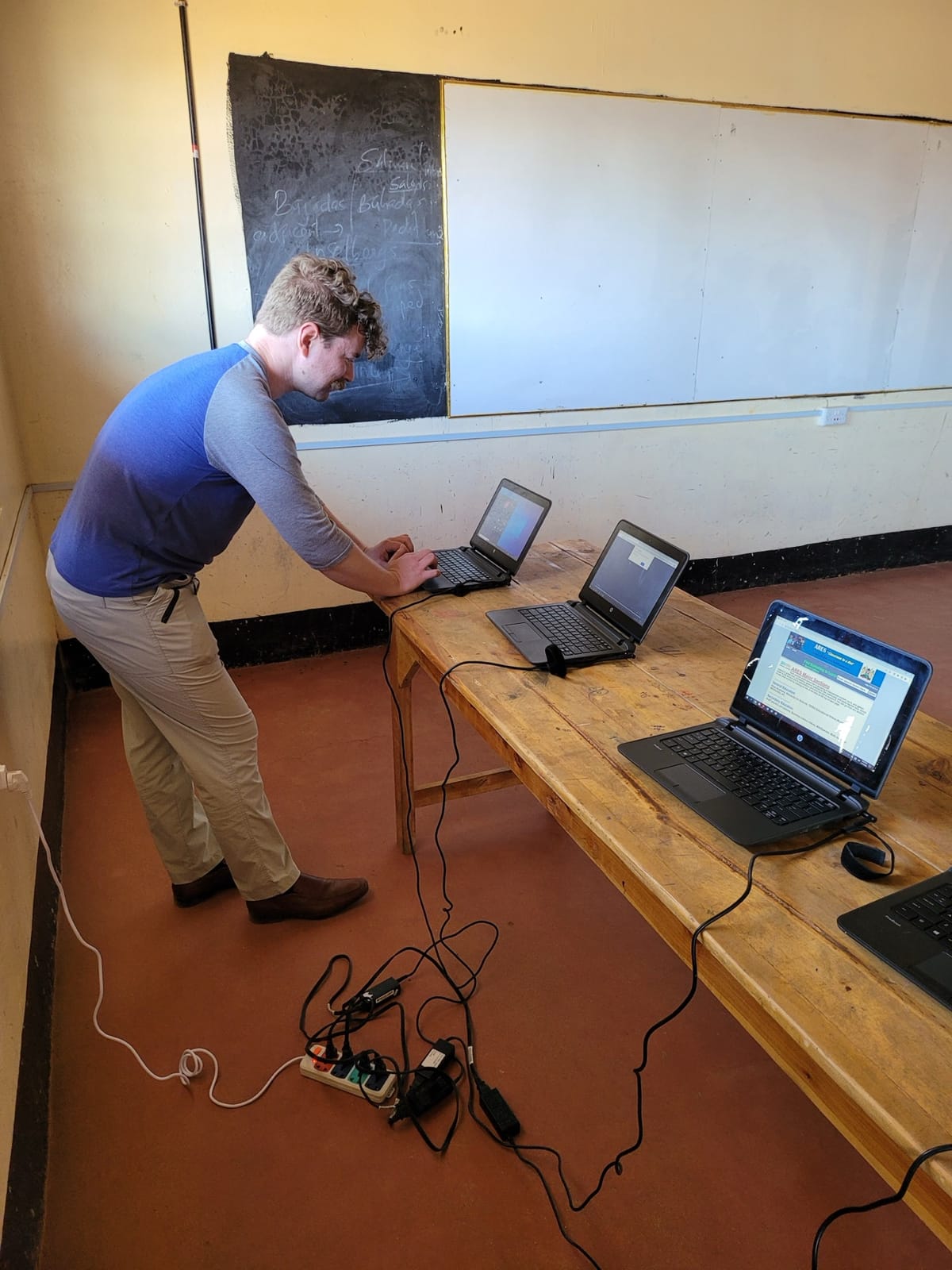
It might seem strange to build a digital education system that doesn't use the internet. For rural Kenyan schools, it is the only approach that works.
Power and connectivity aren't there
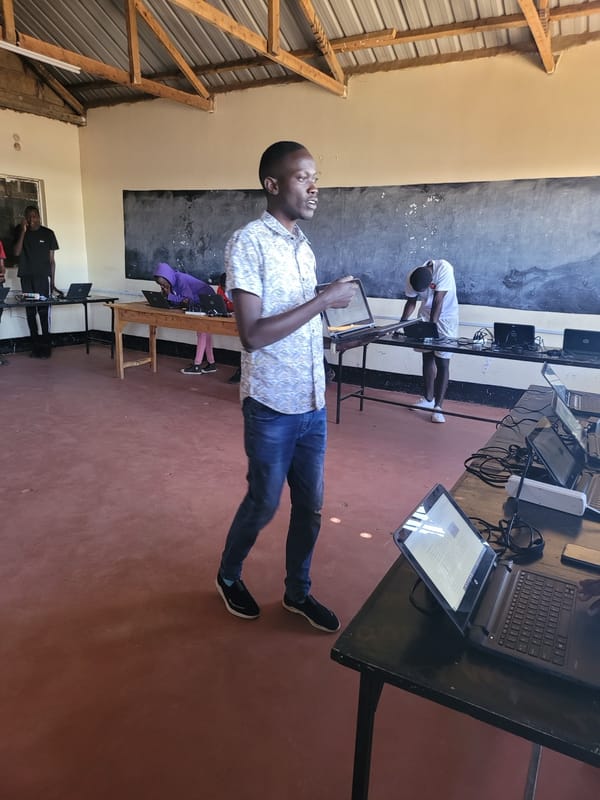
Many of the schools we serve have no grid power, or power that cuts out daily. Mobile data is expensive. ARES runs on battery for a full school day and serves a whole campus over its own mesh Wi-Fi network, so nothing depends on an outside connection.
Fragile computers don't last
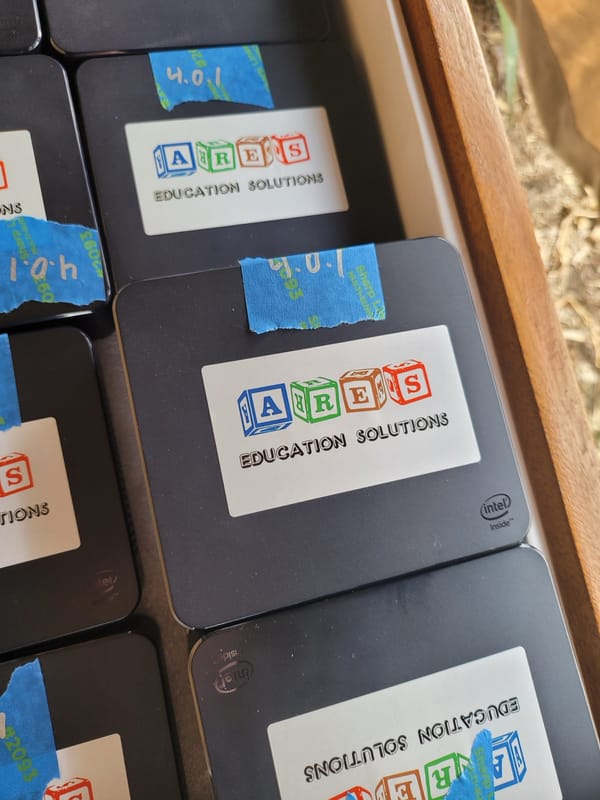
Early computer labs taught us a hard lesson. A year after installation, too many machines were broken or stripped for parts. ARES uses a rugged server with solid-state storage, integrated cooling and low energy use, and pairs it with robust notebooks and local support.
The open internet isn't a classroom
The internet is messy, time-consuming and sometimes dangerous for children. ARES gives students the best of it, including Khan Academy, Wikipedia and TED, without viruses, social media, advertising or predators.
It keeps costs low
With no data bills, open-source content and one server serving hundreds of students, the cost per pupil is very low. That is what makes it realistic to reach 100 more schools.